Gold and Silver Prices Sink on Inflation Data and Rising Yields
Disclosure: This blog post was created with AI assistance. AI can be helpful, but it can make mistakes.
Key takeaways
- Gold and silver prices fell sharply on September 10, 2026, as hot wholesale inflation data pushed Treasury yields higher.
- Rising yields increase the opportunity cost of holding non-yielding bullion, which pressured both spot gold and spot silver that session.
- Short-term price swings differ from long-term ownership goals, making dollar-cost strategies worth understanding for physical gold and silver buyers.
In this article
Gold and silver prices moved sharply lower on September 10, 2026, after a hotter-than-expected wholesale inflation report and a jump in Treasury yields outweighed safe-haven demand tied to geopolitical tension in the Middle East. According to Kitco’s afternoon market report, spot gold traded near $4,317.10 an ounce, down 1.90% on the day, while spot silver fell more sharply to $63.500, down 5.46%. For physical gold and silver buyers trying to make sense of a volatile trading session like this one, understanding what actually moved the market can help separate short-term noise from long-term ownership decisions.
What Pushed Gold and Silver Prices Lower
Per Kitco’s reporting, the August Producer Price Index rose 0.4% on the month and 5.4% year-over-year, with energy and diesel costs driving much of the increase. That data arrived alongside a surge in crude oil, with WTI settling up 6.7% at $102.48 a barrel and Brent gaining 6.3% to $107.63, the highest closes for both benchmarks since May 19, according to the same report. The European Central Bank also raised its benchmark rate by 25 basis points to counter energy-driven inflation stemming from the Iran-related conflict, and by the close, Fed-funds futures were pricing a 71% probability of a quarter-point U.S. rate hike at the upcoming meeting. The 10-year Treasury yield jumped to 4.943%, its highest settlement since October 2023, per Kitco.
Why Higher Yields Matter for Precious Metals
Gold and silver don’t pay interest or dividends, so when yields on bonds and cash-equivalents rise, holding bullion becomes relatively more expensive in opportunity-cost terms. Think of it like choosing between a savings account that suddenly offers a much better rate and a safety deposit box that holds its value but pays nothing. When the savings account rate jumps, more money tends to flow there, at least until inflation or other risks make the metal’s stability more attractive again. That’s essentially what unfolded on September 10, 2026: rate expectations and bond yields moved so quickly that they overshadowed the safe-haven pull normally associated with an active conflict zone. Kitco noted that gold fell through its 200-day EMA reference level, while silver lost several key technical support levels before stabilizing.
A New Trading Product Adds Context to Metals’ Popularity
Separately, CNBC reported that prediction-market platform Kalshi received CFTC approval and launched perpetual futures, or “perps,” tied to gold and silver on September 10, 2026. These are futures-style contracts with no expiration that track an asset’s price without requiring ownership of the underlying metal. A Kalshi executive told CNBC that metals draw high interest because of their connection to inflation narratives. This is a separate development from the day’s price action, but it underscores that trading interest in gold and silver, whether through paper contracts or physical ownership, remains active even during a volatile pricing session.
What This Could Mean for Physical Gold and Silver Buyers
It’s worth being clear: perpetual futures are paper derivatives settled in cash, not physical bullion changing hands. They don’t reflect coin or bar premiums, dealer inventory, or the process of taking delivery. For physical gold and silver buyers, a session like September 10, 2026 is a reminder that spot prices can swing meaningfully within hours based on macro data, and that watching spot price charts regularly can help put single-day moves into context rather than reacting to a headline number alone.
Rather than trying to time short-term volatility, some buyers prefer a steady, scheduled approach. Programs like Ploutos Steady Stack automatic gold and silver purchases allow for consistent, recurring purchases over time, which can smooth out the effect of any single volatile day. This approach doesn’t guarantee outcomes, but it does remove the pressure of trying to guess whether a report like the PPI print, or the next one, will push prices up or down.
A Practical Checklist for Volatile Pricing Days
- Check a reliable, updated spot price chart before assuming a headline reflects the current market.
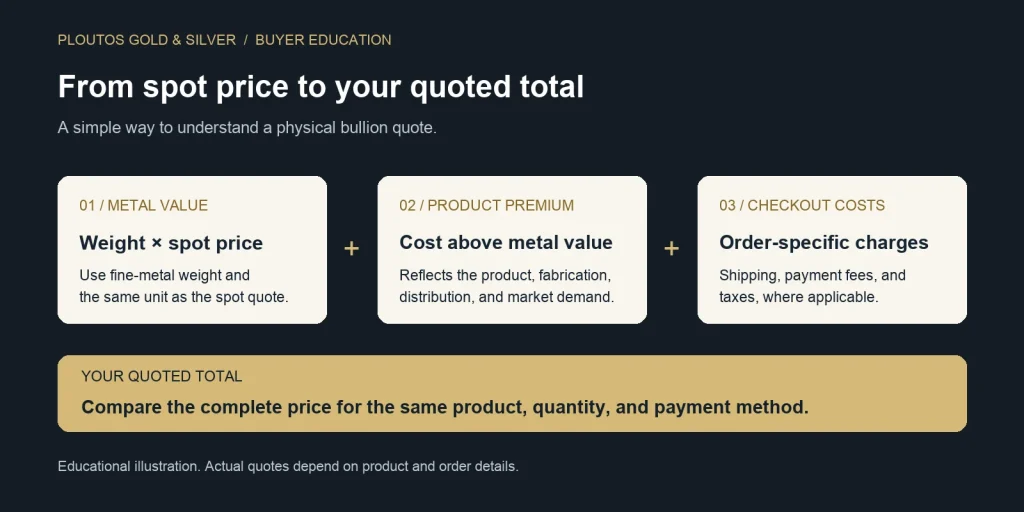
- Distinguish between spot price moves and the premiums dealers charge on physical gold bullion products and silver bullion products.
- Remember that paper products like futures or perpetual contracts don’t involve taking physical delivery.
- Consider whether a recurring purchase plan fits your goals better than trying to time single-day swings.
For buyers specifically interested in silver, coins such as the 2026 1 oz American Silver Eagle or the 2023 Mexican Silver Libertad remain popular recognized formats, while gold buyers often look at options like the 1 oz American Gold Buffalo. None of these product mentions imply a current price or available inventory; check current listings for that information.
Frequently Asked Questions
Why did gold and silver prices fall so sharply on September 10, 2026?
According to Kitco’s report, hotter-than-expected wholesale inflation data, a jump in oil prices, and rising Treasury yields combined to outweigh safe-haven demand tied to Middle East tensions that day.
Does Kalshi’s new perpetual futures product affect physical bullion prices?
Perpetual futures are cash-settled derivatives that track price movements without involving physical metal. CNBC’s report describes them as a new trading product, not a change to physical market supply or delivery.
How can physical gold and silver buyers respond to a volatile pricing day?
Many buyers focus on long-term goals rather than single-day swings, using tools like spot price charts to stay informed and considering scheduled purchase approaches instead of trying to time short-term moves.
Volatile sessions like this one are a normal part of how gold and silver trade, shaped by inflation data, interest rate expectations, and geopolitical developments all at once. Rather than reacting to any single day’s headline, physical gold and silver buyers are often better served by understanding the underlying drivers and deciding what ownership strategy, whether a one-time purchase or a recurring plan, fits their own goals.
Sources
Disclaimer: This blog post was created with AI assistance. AI can be a useful tool, but it can make mistakes. The content is for entertainment purposes only and is not financial, tax, or legal advice. Please call Ploutos Gold & Silver at 617-564-1630 if you have any questions.
Appointment required
Local pickup and bullion testing are by appointment only
Planning to pick up an order or ask about bullion testing in Brockton? Text or email first so we can arrange an appointment.